Followers

Showing posts with label Bethnal Green. Show all posts

Thursday, 24 January 2008

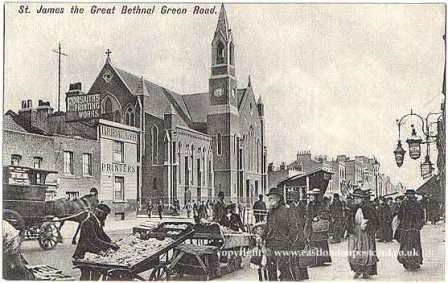
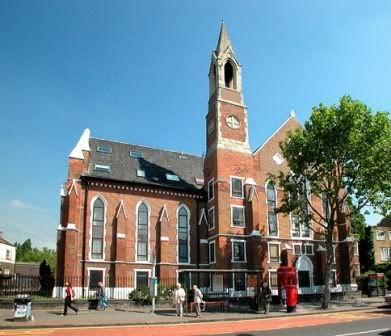
The Red Church, Bethnal Green, London

Photobucket - Video and Image Hosting

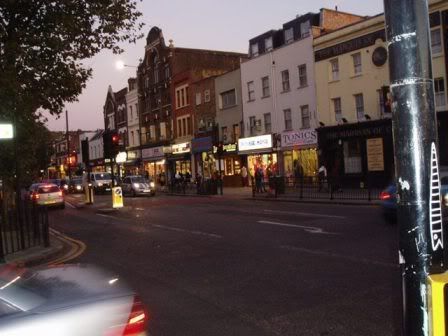
Although the church still looks the same, naturally the surroundings have changed over the years. Horsedrawn carriages have been replaced by the No. 8 London bus and the small businesses, although still there, have been altered and changed hands and you are today more likely to find an Indian restaurant or clothing shops selling the latest fashion in saris than a printers. Also the street gas lighting is full modern electricity and the people dress differently. The stallholders are still there and Bethnal Green market still exists, selling fruit and vegetables.

Why the red church? Well if you just walk down the street next to the church and make a turn to the left you come to a small park, which once contained about 70 houses, each with their own small garden and each attached to the next, which was where I grew up. Quite a modern thing actually, as there was no through traffic so we kids had a choice of playing on the debris from the bombed out houses left after the war (sort of adventure playground) or playing down the street. According if mum had a eye on what you were doing, you played in the street. If she was indoors with the door shut, then a risky visit to the bombed out houses was quite fun.

Back to the Red Church. It is called red church, because it was built of red bricks some time in the 19th century, its official name being St. James the Great. When I was a kid, my parents found a bit of religion did no harm so I was sent to Sunday school at this church with some street colleagues. They even had a group of nuns attached to the church and they were our Sunday school teachers. One would play piano and we all sang our hymns. It is so-called Church of England, but actually in England known as "high-church" sort of catholic without the Roman bit, although for my mum and dad church was just church (as long as the name of England stood there). I remember the services had a bit of incense thrown in and around Easter we did a big thing every evening for a week in the church with the nuns. They showed us around and each evening was a picture of the Easter story and they explained everything. Today I havn't got a clue what the explanations were, but it kept us youngsters off the streets and it was our sort of "youth club". We had a card, and each time we went the nuns would stamp the card with a star.

It was in this Red Church that my mum was christened, as well as her brother and two sisters, and also got married there when my dad came home from the war. It is a natural conclusion that I was also christened in the church. When I first arrived in Switzerland I would go back for a couple of weeks each year to see my parents who still lived in our house in Bethnal Green. The church was the first homecoming building I saw as I walked down the road from Bethnal Green Tube Station where I arrived from London Airport. There was no train connection from London Heathrow at that time, and I had to take the airport bus to Victoria where I could get on the train.

After many years my parents moved out to Dagenham, my mother died and my visits were fewer to London as I had a growing family to look after. When my family at last were standing on their own feet (although I am still not sure today if they are), I visited London a bit more and now and again made a visit to the East End, Bethnal Green. Imagine my surprise when I saw the Red Church again after many years. In the meanwhile the church was no longer a church. I found this little bit of information on Rootsweb

"St James The Great was known locally as the "Red Church" because it
was built with red bricks. In 1997, the building is still standing in
Bethnal Green Road, but has now been converted into Flats.
It's once famous Reverend E.F.Coke married couples without fees.
'Penny Weddings' were common in the East End of London during the
19th and early 20th century. He married approx 1500 couples per year,
for a total of 23,500 in his lifetime. This in a parish that only had
about 5000 people, paying lip service to the residential requirement
for calling the Banns. People came from miles away to get married
here."

By the way the explaination about the penny weddings in the text was a true historical fact. People couldn't really afford a wedding in the earlier days so a kind priest made it financially easier for the population. So the church had its religion taken away and had been transformed into flats. Instead of stained glass windows there were curtains on the windows. It looks quite strange. Perhaps in a way a landmark has been preserved. The nuns went a long time ago. There was even a new extension built onto the church for youngsters - table tennis and meeting room. This new extension only survived a few years. I remember seeing the windows broken after a few years so this idea was also given up.

My mother was quite a church goer in earlier years, but she told me there was nothing else. You had your social life at the church as a youngster. All her friends in the neighbourhood would meet there before the war. The church survived the second world war, but I think it was no longer the centre that it was before the war. Here is a photo of the church today

Photobucket - Video and Image Hosting


Tuesday, 21 August 2007

Norah Street, Bethnal Green

Photobucket - Video and Image Hosting
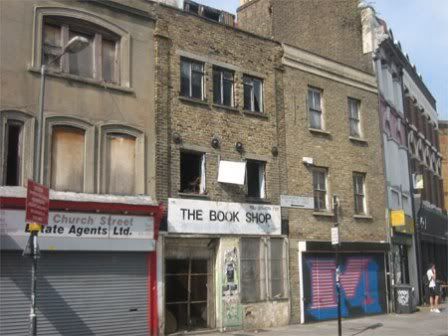
The photo shows part of Bethnal Green Road in the East End of London, borough of Tower Hamlets, I grew up in this part of London and usually go back once a year and have a look around if anything has changed. Of course, a lot has changed. The population have changed and a large percentage is of Bangla Desh or Somali origins. It was always an area for ethnic minorities, my own ancestors being part Huguenot, (although the minorities are becoming somewhat majorities) and many people visit this part of the East End to take advantage of what it has to offer – restaurants with far eastern food choices and shops selling vegetables and fruit that although today are known, but in my younger years were exotic to say the least.Somewhere on my blog I wrote an article about my street in Bethnal Green, Norah Street, see link. It is a few minutes walk from the photo above just around the corner, as one would say. I mentioned in my earlier article that the late Dusty Springfield once recorded an tv commercial for Wonderbread in this street. The actual recording work must have taken place around 1964 when I was around 18 years old – I think. This morning I had a wonderful surprise when I switched on the computer. A Yahoo contact sent me the video via You Tube. Someone in the States of all places had put it on You Tube. Imagine my surprise – even got the “wet eye” syndrome seeing my street alive again with all its houses and the square in the middle which was not available to through traffic and where I spent my childhood years. The person who sent me the video is also a one time inhabitant of Norah Street, but somewhat younger than I am and actually lived in the street up to the time that it was ready to be demolished. And here it is (in black and white of course).


Friday, 17 August 2007

Down the Lane


Photobucket - Video and Image Hosting


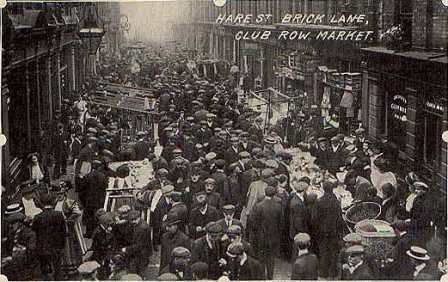
By down the Lane, I mean Brick Lane in the East End of London, old borough of Bethnal Green today known as Tower Hamlets. Brick Lane starts in Bethnal Green Road and eventually leads to Petticoat Lane which is generally well known as the Sunday morning market of the East Enders.

Today there is not very much left of the East End cockneys in this market. Colourful stands with goods from Asia, the main immigrant population of today being from Bangla Desh. Smells of Indian curry and associated food waft along the streets. The book "Brick Lane" by Monica Ali has also made the area well-known. By the original local cockneys the book is looked upon with dissaproval. I have read the book and find a very good description of how a Bangla Desh girl has to leave her country and arrives in the East End of London to live with a husband and environment she does not know anything about. Nothing really to do with the East End, but with the problems of immigrants - so is the book intended as the result is very good.

I am now going back to the 1950's/60's when I was around 8-15 years old and still living in the area. The reason I lived here was probably based on my mother's family whose grandmother was a Huguenot descendent. The Huguenots arrived in England in the 17th century due to religious persecution in France (they were protestants, France was catholic) and one of these refugees (my ggg grandfather approximately, settled in the East End of London). Ok, this great grandmother was the child of a Huguenot and a lady from Norfolk. Thus my grandfather was born in the East end (Hoggerston to be exact) and my mum's family all grew up in Bethnal Green.

Back to Brick Lane. On Sunday morning there was the famous market. On Sunday my mum was occupied with cooking the Sunday dinner. Roast beef and Yorkshire pudding with baked potatoes for example followed by apple pie and custard (not every Sunday but this was the usual). To let her get on with this task in peace and quiet it was my dad's duty to take his little girl out (me). Where did we go - down the Lane. Hand in hand we walked down the Bethnal Green road and turned the corner Bethnal Green Road/Brick Lane and there we were. In the middle of crowds bustling with activity, buyers and sellers all collected around the various stalls. As a kid it made quite an impression on me. At the beginning of the lane there was a Jewish bakers (the Jewish immigrants came at the beginning of the 20th century and settled in and around the Lane). We walked past the bakers - on the way back we would buy a few bagels for Sunday evening tea.

Further down the Lane we came to stalls where records were being sold. The CD and even LP records did not exist in the 50's/60's. The records were 78 rpm. My dad loved these stalls. He could search for a few old memories on the records - I remember 4 for a bob (a shilling) or 2 bob according to the condition and who it was. Harry James, Woody Hermann, Mugsy Spanier, Rox Fox, Cab Calloway, just to name a few. Anything old jazz was my dad's taste and his eyes would sparkle when he found such a gem. I used to have my money's worth as well although the only record I remember buying after so many years was "I taught I taw a puddy cat" by Mel Blanc which I often used to listen to on Children's favourites on the Saturday morning radio brought by Uncle Mac.

After our visit to the records it was my turn and we moved on to the comic shop. This was a little shop in the Lane, the door being permanently open in the entrance four or five special tables each one full of comics. I was always allowed to pick 4 (4 for 2 bob - very reasonable). I always took a Superman, a Roy Rogers and something from Space. My fourth choice was a Classics Illustrated. I was always a great reader and I just loved books. Although the Classics Illustrated was not the original as a 10 year old I had a simplified way of knowing what the great authors wrote. When I visited my 91 year old dad in London last year he told me that it was a shame we didn't keep the comics, especially the Classics Illustrated. He read that today they were worth quite a bit of money.

Our journey down the Lane usually started around 10 o'clock in the morning and around 11 o'clock we would get a bit thirsty. Dad always looked after me first and we would stop at one of the stools selling drinks. There were sort of bottles in a contraption hanging upside down of all colours. My favourite was sarsparilla. I think it was brown and probably the fore runner of Coca cola. It was not the taste so much, but you were drinking something like beer (although no alcohol). Who knows what was in it and today it would probably be banned through some sort of health laws.

Food was also available and I was always treated to an Italian ice cream - they were just the best, bought from a cart. The ice cream had bits of ice in it and you could get vanilla, strawberry or pistachio. Nothing fancy with all sorts of designer names like today. Frankfurters were also sold. A sort of dark red sausage pulled out of hot water and put in a roll with mustard. This was forbidden. Mum was very strict about them. She found they were not good for you, you didn't know what they were made of and you would get all sorts of strange illnesses if you ate one. I always wanted one, but mum's word was law and dad did not buy me one. I can remember the smell of them even today.

I can also remember the sales men selling crockery. They would have their plates, cups and saucers and there was one show on the street when they were trying to sell their goods. The salesmen were artists. They would throw the crockery into the air and catch it again, without anything being broken. You could also buy pots and pans. We had some at home, but I didn't like them. Mum and dad thought it was a wonderful bargain, they were made of aluminium, but I always found that the food cooked in them tasted of aluminium as well. They were the good old days where you saved where you could but we all survived.

Before finishing our tour of the Lane we went through the Pet Market. I don't know whether the film A Kid for Two Farthings is known - I have a copy at home. It was made in 1955 based on life in Brick Lane and the little boy in the film bought a kid goat from a man in the Lane. The Pet Market in Club Row existed when I was a kid. People with their animals just stood there, their dog on a lead, chickens in a cage or cats in a box. Probably their stray at home had had youngsters and they wanted to earn some money by selling them. Of course me being an animal lover, wanted a puppy, a kitten and even a little chick. Even white mice or a rat would have been ok. Poor dad had to explain that we just could not take one home. We did not have the room and my mum was frightened of mice and rats so that was that. Club Row was just near the arches of Bishopsgate Goods Station which burnt down some time in the 60's. If you walked through the arch you would arrive in Commercial Road - Jack the Ripper country.

Our visit to the market was finished and we turned back into the Bethnal Green Road, not forgetting to buy our Bagels at the Jewish bakers. The next stop was the pub. We always went to the same pub. It had a long entrance with benches outside where dad could get his pint, I had my cream soda and we could sit together. The entrance to the pub had mosaic on the wall and I remember the picture in mosaic of old Bethnal Green in the days when it was fields and farms.

On the way down the Bethnal Green Road there were many stalls selling Prawns, Shrimps, Cockles and Winkles - sea food brought in from the surrounding London ports. They were not sold in weight, but in liquid weights - pints etc measured in enamel mugs. We always bought some for our Sunday evening tea (to eat with the bagels). At that time there was no health issue in eating them, but today with the state of the local water, no-one really bothers to buy them.

Eventually we arrived home (sort of tired but happy). Dinner was never served before 2 o'clock on Sunday so we did not have to rush. Looking back, childhood in the East End was something I am glad I had. They are memories and events that will never repeat themselves. It was London after the war, Most of the new buildings did not exist and half of Bethnal Green road was ruins of the places bombed in the war. It was just my London.


Photobucket - Video and Image Hosting


I found this photo on Internet showing the corner of Bethnal Green Road/Brick Lane. My Jewish bakers doesn't seem to exist any more - it just belongs to the past.

Friday, 3 August 2007

Memories of Bethnal Green London - Norah Street


Photobucket - Video and Image Hosting

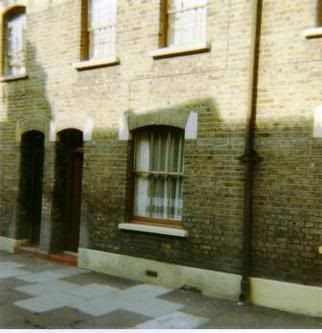
45 Norah Street, Bethnal Green, London, E.2 was my address for the first 20 years of my life. The street was built, according to a stone plate on one of the houses, in 1884. Actually it was two squares with a through road (Ivimy Street) . In 1884 there was no electricity and there were gas holders in all the rooms which were lit as illumination. Heating was by open coal fire and in the garden there was a large shed for keeping the coal reserves. In the kitchen there was an open coal fire and next to it a built-in oven and cooking range which took its heat from the fire. Hot water didn't exist, neither a bathroom or an inside toilet. All water had to be boiled and washing was done once a week by boiling water together with the washing in a large container.

My grandfather and granmother got married in 1907 and this was when they moved into the street. They both grew up in the East End of London and were happy to find somewhere where they could live and bring up their family. They moved into the 3 lower rooms of the house in the picture above, having a kitchen/living room and 2 bedrooms. The toilet was in the garden and shared with the family living upstairs in the house who had the same amount of rooms as my grandparents. The family grew bigger and there were 3 daughters (my mum being the youngest daughter) and a son, the youngest child. There were 6 people living in 3 rooms. Upstairs there was a family that had 6 children so there were 14 people living in the house, not to mention that all shared the same toilet in the garden. Every house had its garden, small but it was there and every garden had chickens or other livestock. My grandfather had chickens and also according to my mum a duck. The drainage was a rain pipe down the wall of the house where all water went from the sink and there was a large sink in the garden. This was blocked from time to time to let the duck have a swim. There were also 2 dogs and a cat in the family.

Time went on and two world wars passed through the street, but leaving the street standing completely. At the end of World War II there was a street party where everyone in the street celebrated together.

During the war people slept in their gardens at night. "Nissen huts" had been erected for the inhabitants as it would have been too dangerous to sleep in the houses during the bombing raids. This part of London was very near the docks and a dangerous area.

I grew up in this street and remember it well. As a child I first of all slept in the same room as my parents, but when I got older had my own room. We were then living in 3 rooms, a kitchen/living room/dining room and two bedrooms. My grandfather lived in the 3 rooms downstairs. Rent was paid once a week and a rent collector came for the money. Although I remember the open fire in the kitchen and the cooking facilities, my mum had a gas cooker which was to be found on the landing (3 steps leading up to a corner before the bedroom). How she complained about the 3 steps up and down all the time. My bedroom still had the gas fittings although we did have electricity. My mum was always proud to tell me that her mother was one of the first people that signed to have electric cables put down for the street.

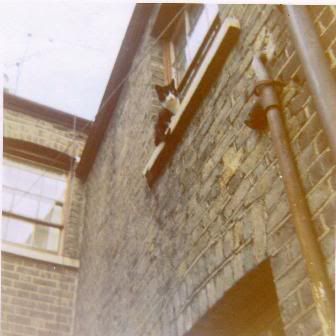
The drainage system was very basic. There was a large pipe leading down the walls of the house outside. There was a smaller pipe from the sink leading into the larger pipe. The water then went into the drain in the garden. If the drain got blocked for some reason or another, you had a problem. In Winter under cold temperatures the water would freeze in the system and usually you found that the pipes leading to and from the houses were covered in "lagging" (anything that gave warmth like sackcloth was wrapped around the pipes and fixed by string to stop freezing).

Heating was orginally from a fireplace. I remember how to make the fire. First of all newspaper, afterwards a layer of wood and finally the coal. If the coal wasn't so good it would crack and spit and sparks would fly. The better quality coal burnt nicely with no problem. I think my mum and dad knew all the names and qualities of the coal you could buy. The coal was brought by the coalmen in sacks which they somehow carried on their heads. We had an enormous coal bunker in the garden where it was tipped into. Later coalfires were forbidden and all the houses were fitted with gas fires.

For the first 10 years of my life we didn't have a refrigerator, but a so-called "safe" out in the garden. It was a small cuboard for keeping perishable food items. In Winter ideal, but in Summer we had to find other solutions. Usually filling up a bowl with cold water and putting the milk bottles and butter in it. The toilet was still outside (how I hated the insects especially spiders that usually lived there) and as a kid my weekly bath was in the kitchen in a metal tub. As I got older it was once a week to York Hall public baths.

School was in walking distance from the house - as was everything in those days - and I was usually accompanied on the way by other kids from our street. It was a sort of paradise for us kids growing up. We had a square with no through traffic and as can be seen in the picture above there were paving stones - very handy for drawing on with chalk and playing hopscotch. We could skip and had a lamppost in the middle of the street. If you managed to hang your skipping rope on it you could swing around (until our mums told us not to). Otherwise the lamp posts were good training for climbing. As we got older we had roller skates and the road in between the two squares had a slope which was ideal for rolling down. The street was full of playing kids, mothers standing at the doorsteps and grandparents sitting outside on their chairs watching the world go by.

As I mentioned our street was luckily not hit during the war, but it seemed that most streets around us were. For us kids this was adventure playground live. Playing in the "debris" of the bombed out houses - dangerous but enjoyable. I remember some of the "gardens" left from the houses. The flowers just grew wild and I often brought my mum and bunch of flowers home from the playground.

We had some interesting neighbours. My mum knew them all as most of the women were at school with her. That was probably why she always called them by their single names. Even their children who I went to school with were known with their mother's single name. She just didn't know the paternal names.

Next door there were 2 sisters of my mum's age living on the bottom floor with their mother.The third sister had married and lived upstairs with her husband. Opposite there was an elderly couple without children, but my mum knew their son well - he never came home from the 2nd world War. 3 doors further down there lived a married couple. The man of the house kept racing pigeons in the garden. The garden was full of pigeon lofts. He would let them out for a fly and then stand outside called "comeon, comeon" and shaking a bag of their food and in they would come one after the other. They also had a dog and I remember his wife going for a walk early in the morning dressed in her nightdress with a long dressing gown over it. Opposite there lived a small wide lady whose main hobby was polishing her door nob. We all had door nobs as well as a door knocker. Her door nob was brass and shone like a golden sun. Even the wood around the nob had a different colour to the black wood of the door due to the cleaning she did all the time. My Aunt lived opposite with her husband on the top floor of one of the houses, She shared the house with two sisters that lived downstairs and who she didn't get on with so well. I remember when I was on a visit that I had to walk through the sister's kitchen to get out into the yard where the toilet was. They had hung a thick blanket up to stop people looking into their kitchen.

As the years went by electicity became more and more important. Unfortunately our electric installations were fairly basic and it was a miracle that nothing ever happened. My dad did most of the electrical installations and we usually had one main plug in a room where he made a lead to another plug in another room which also connected to another plug in a third room. I don't know today how it all worked. I remember our first television, very small but we had one. We were one of the first families in the street to have one, so when the Cup final at Wembley was being played our house was usually full of the men of the street invited to watch the match. Everyone brought their own beer and my mum and I usually went out shopping or perhaps a visit to the cemetry.

With time my grandfather died at the age of 89 (showing that the conditions couldn't have been that bad after all) and we took over the complete house. My bedroom was then downstairs and the window in the top picture became our living room (but we rarely used it). I think we just lived in the kitchen. We even had a piano. In my mothers younger days many parties were held in the house and each one of my aunts could "play" - who cared as long as you sung loud enough. They could all pick out the tunes with their right hand, their lefthand was a bit dodgy.

Then came the day when the late Dusty Springfield visited Norah Street to make a television commercial for Wonderbread (I think that was the name of the bread). The advertising company found that our street was a perfect setting for the scene. The television crew arrived, together with Dusty Springfield and her group, as well as a coach full of extras that was parked in Squirries Street backing onto Norah Street. The filming soon began and we all had the chance to see and hear Dusty singing her "bread" song (playback) and watching the filming. The extras all hid in the many doorways of our square and when the music started they all came out into the street, some on roller skates, some running and some walking. The filming must have taken at least a week. We were astonished most of all watching the "extras". They seemed to spend more time sitting in their coach than actually taking part in the filming. All the inhabitants of the street were naturally glued to their televisions when the commercial was shown.

If there is anyone of the younger generation who doesn't remember the great Dusty Springfield - here is a reminder - one of her finest songs.


Things stayed this way and I eventually left home at the age of 20. I remember my mum's biggest wish was that she would eventually be rehoused into a council house. A few years later the wish was fulfilled and moved out with the rest of the street further East of London. Some people remained in East London, but my mother didn't want to.

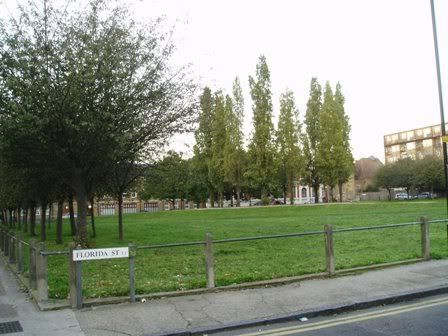
The end of Norah Street came around 1974 when it was pulled down. Now in its place there is a small park - difficult to imagine that once more than a hundred houses, 3-up - 3-down, were on such a small space.


Our Cat Whisky perched on our window sill on the top floor
He loved watching the sparrows on the opposite roof


Image


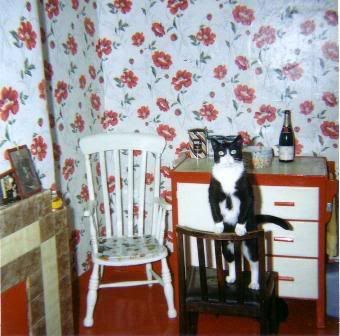
Cat Whisky in our kitchen/living room/dining room
The rooms were very small - note the wallpaper to brighten things up a bit


Image


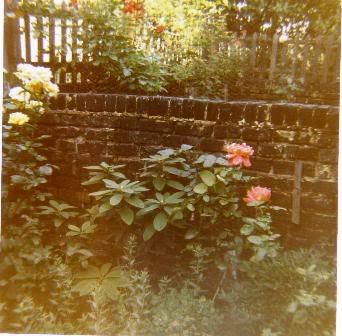
Even Roses grew in our small back yard
Image


Norah Street November 2006
Image


Photobucket - Video and Image Hosting