Followers

Friday, 3 August 2007

Memories of Bethnal Green London - Norah Street


Photobucket - Video and Image Hosting

45 Norah Street, Bethnal Green, London, E.2 was my address for the first 20 years of my life. The street was built, according to a stone plate on one of the houses, in 1884. Actually it was two squares with a through road (Ivimy Street) . In 1884 there was no electricity and there were gas holders in all the rooms which were lit as illumination. Heating was by open coal fire and in the garden there was a large shed for keeping the coal reserves. In the kitchen there was an open coal fire and next to it a built-in oven and cooking range which took its heat from the fire. Hot water didn't exist, neither a bathroom or an inside toilet. All water had to be boiled and washing was done once a week by boiling water together with the washing in a large container.

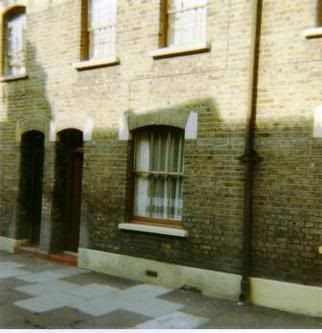
My grandfather and granmother got married in 1907 and this was when they moved into the street. They both grew up in the East End of London and were happy to find somewhere where they could live and bring up their family. They moved into the 3 lower rooms of the house in the picture above, having a kitchen/living room and 2 bedrooms. The toilet was in the garden and shared with the family living upstairs in the house who had the same amount of rooms as my grandparents. The family grew bigger and there were 3 daughters (my mum being the youngest daughter) and a son, the youngest child. There were 6 people living in 3 rooms. Upstairs there was a family that had 6 children so there were 14 people living in the house, not to mention that all shared the same toilet in the garden. Every house had its garden, small but it was there and every garden had chickens or other livestock. My grandfather had chickens and also according to my mum a duck. The drainage was a rain pipe down the wall of the house where all water went from the sink and there was a large sink in the garden. This was blocked from time to time to let the duck have a swim. There were also 2 dogs and a cat in the family.

Time went on and two world wars passed through the street, but leaving the street standing completely. At the end of World War II there was a street party where everyone in the street celebrated together.

During the war people slept in their gardens at night. "Nissen huts" had been erected for the inhabitants as it would have been too dangerous to sleep in the houses during the bombing raids. This part of London was very near the docks and a dangerous area.

I grew up in this street and remember it well. As a child I first of all slept in the same room as my parents, but when I got older had my own room. We were then living in 3 rooms, a kitchen/living room/dining room and two bedrooms. My grandfather lived in the 3 rooms downstairs. Rent was paid once a week and a rent collector came for the money. Although I remember the open fire in the kitchen and the cooking facilities, my mum had a gas cooker which was to be found on the landing (3 steps leading up to a corner before the bedroom). How she complained about the 3 steps up and down all the time. My bedroom still had the gas fittings although we did have electricity. My mum was always proud to tell me that her mother was one of the first people that signed to have electric cables put down for the street.

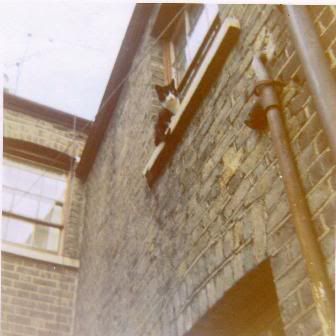
The drainage system was very basic. There was a large pipe leading down the walls of the house outside. There was a smaller pipe from the sink leading into the larger pipe. The water then went into the drain in the garden. If the drain got blocked for some reason or another, you had a problem. In Winter under cold temperatures the water would freeze in the system and usually you found that the pipes leading to and from the houses were covered in "lagging" (anything that gave warmth like sackcloth was wrapped around the pipes and fixed by string to stop freezing).

Heating was orginally from a fireplace. I remember how to make the fire. First of all newspaper, afterwards a layer of wood and finally the coal. If the coal wasn't so good it would crack and spit and sparks would fly. The better quality coal burnt nicely with no problem. I think my mum and dad knew all the names and qualities of the coal you could buy. The coal was brought by the coalmen in sacks which they somehow carried on their heads. We had an enormous coal bunker in the garden where it was tipped into. Later coalfires were forbidden and all the houses were fitted with gas fires.

For the first 10 years of my life we didn't have a refrigerator, but a so-called "safe" out in the garden. It was a small cuboard for keeping perishable food items. In Winter ideal, but in Summer we had to find other solutions. Usually filling up a bowl with cold water and putting the milk bottles and butter in it. The toilet was still outside (how I hated the insects especially spiders that usually lived there) and as a kid my weekly bath was in the kitchen in a metal tub. As I got older it was once a week to York Hall public baths.

School was in walking distance from the house - as was everything in those days - and I was usually accompanied on the way by other kids from our street. It was a sort of paradise for us kids growing up. We had a square with no through traffic and as can be seen in the picture above there were paving stones - very handy for drawing on with chalk and playing hopscotch. We could skip and had a lamppost in the middle of the street. If you managed to hang your skipping rope on it you could swing around (until our mums told us not to). Otherwise the lamp posts were good training for climbing. As we got older we had roller skates and the road in between the two squares had a slope which was ideal for rolling down. The street was full of playing kids, mothers standing at the doorsteps and grandparents sitting outside on their chairs watching the world go by.

As I mentioned our street was luckily not hit during the war, but it seemed that most streets around us were. For us kids this was adventure playground live. Playing in the "debris" of the bombed out houses - dangerous but enjoyable. I remember some of the "gardens" left from the houses. The flowers just grew wild and I often brought my mum and bunch of flowers home from the playground.

We had some interesting neighbours. My mum knew them all as most of the women were at school with her. That was probably why she always called them by their single names. Even their children who I went to school with were known with their mother's single name. She just didn't know the paternal names.

Next door there were 2 sisters of my mum's age living on the bottom floor with their mother.The third sister had married and lived upstairs with her husband. Opposite there was an elderly couple without children, but my mum knew their son well - he never came home from the 2nd world War. 3 doors further down there lived a married couple. The man of the house kept racing pigeons in the garden. The garden was full of pigeon lofts. He would let them out for a fly and then stand outside called "comeon, comeon" and shaking a bag of their food and in they would come one after the other. They also had a dog and I remember his wife going for a walk early in the morning dressed in her nightdress with a long dressing gown over it. Opposite there lived a small wide lady whose main hobby was polishing her door nob. We all had door nobs as well as a door knocker. Her door nob was brass and shone like a golden sun. Even the wood around the nob had a different colour to the black wood of the door due to the cleaning she did all the time. My Aunt lived opposite with her husband on the top floor of one of the houses, She shared the house with two sisters that lived downstairs and who she didn't get on with so well. I remember when I was on a visit that I had to walk through the sister's kitchen to get out into the yard where the toilet was. They had hung a thick blanket up to stop people looking into their kitchen.

As the years went by electicity became more and more important. Unfortunately our electric installations were fairly basic and it was a miracle that nothing ever happened. My dad did most of the electrical installations and we usually had one main plug in a room where he made a lead to another plug in another room which also connected to another plug in a third room. I don't know today how it all worked. I remember our first television, very small but we had one. We were one of the first families in the street to have one, so when the Cup final at Wembley was being played our house was usually full of the men of the street invited to watch the match. Everyone brought their own beer and my mum and I usually went out shopping or perhaps a visit to the cemetry.

With time my grandfather died at the age of 89 (showing that the conditions couldn't have been that bad after all) and we took over the complete house. My bedroom was then downstairs and the window in the top picture became our living room (but we rarely used it). I think we just lived in the kitchen. We even had a piano. In my mothers younger days many parties were held in the house and each one of my aunts could "play" - who cared as long as you sung loud enough. They could all pick out the tunes with their right hand, their lefthand was a bit dodgy.

Then came the day when the late Dusty Springfield visited Norah Street to make a television commercial for Wonderbread (I think that was the name of the bread). The advertising company found that our street was a perfect setting for the scene. The television crew arrived, together with Dusty Springfield and her group, as well as a coach full of extras that was parked in Squirries Street backing onto Norah Street. The filming soon began and we all had the chance to see and hear Dusty singing her "bread" song (playback) and watching the filming. The extras all hid in the many doorways of our square and when the music started they all came out into the street, some on roller skates, some running and some walking. The filming must have taken at least a week. We were astonished most of all watching the "extras". They seemed to spend more time sitting in their coach than actually taking part in the filming. All the inhabitants of the street were naturally glued to their televisions when the commercial was shown.

If there is anyone of the younger generation who doesn't remember the great Dusty Springfield - here is a reminder - one of her finest songs.


Things stayed this way and I eventually left home at the age of 20. I remember my mum's biggest wish was that she would eventually be rehoused into a council house. A few years later the wish was fulfilled and moved out with the rest of the street further East of London. Some people remained in East London, but my mother didn't want to.

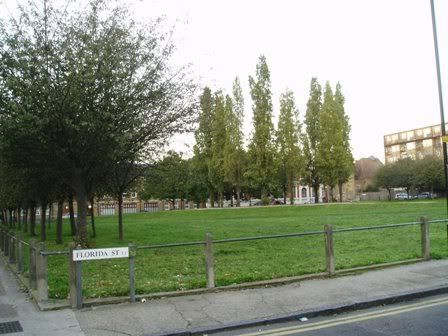
The end of Norah Street came around 1974 when it was pulled down. Now in its place there is a small park - difficult to imagine that once more than a hundred houses, 3-up - 3-down, were on such a small space.


Our Cat Whisky perched on our window sill on the top floor
He loved watching the sparrows on the opposite roof

Image


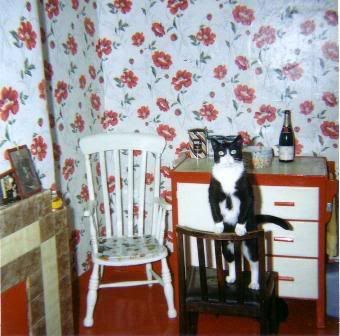
Cat Whisky in our kitchen/living room/dining room
The rooms were very small - note the wallpaper to brighten things up a bit

Image


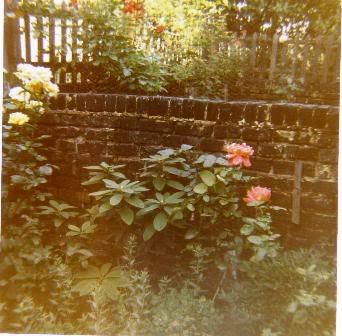
Even Roses grew in our small back yard
Image


Norah Street November 2006
Image


Photobucket - Video and Image Hosting


Our New Island Scenery in Feldbrunnen


Photobucket - Video and Image Hosting


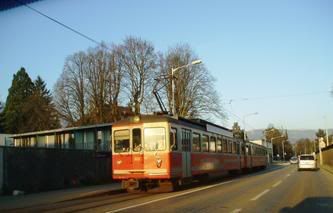
Our local train "Bipper Lisi"

Our small village is being modernised. There has been a lot of housing development in the last 10-15 years but the roads didn't grow with it. The powers that be, our local council, decided that a through road must be built. This is not so simple. It costs a lot of money (but we are Swiss so there should be plenty available) and we have a train which runs from the town of Solothurn to the larger village of Niederbipp making its first main stop in our village of Feldbrunnen. This train is lovingly called the "Bipper Lisi" although so much love no longer exists. A few attempts were made in the past years to abolish this train and to substitute it with a bus service. The people actually using the train thought this a good idea, but the people watching over the train decided this would be a tragedy to lose such an icon, so Bipper Lisi still travels to and from Solothurn 4 times in the hour during the week and twice on Sunday. In the rush hours the train can even be full, but generally there are around 5-10 people that can enjoy the scenic views of the local villages.
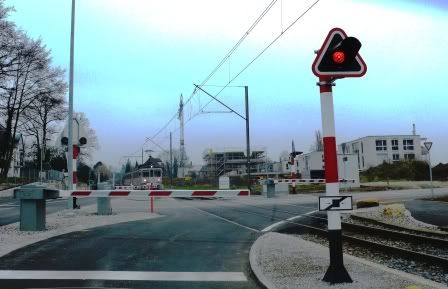
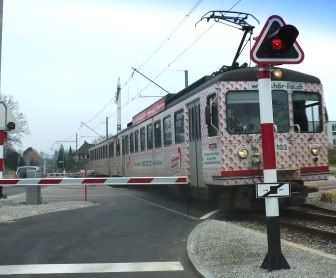
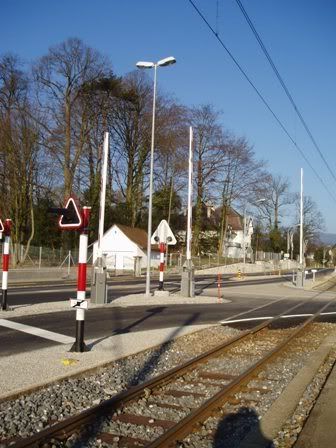
As can be imagined, building a through road is not so simple when a set of rails have to be conquered. Switzerland being a country that has carved railways and roads through their alpine mountains, this should not present a problem. At our local annual council meeting, open to the public, the decision was made to go ahead and some half year later the road builders moved in with their machines and signs and work started.

First of all the main road had to be organised. This meant various new temporary traffic lights showing that only one-way traffic was allowed - not all day, only during the rush hours. Then the digging began. The inhabitants of the village could watch the progress day by day and this could be summarised by a question I heard one of the neighbours asking the work chief "Do you actually know what you are doing?".

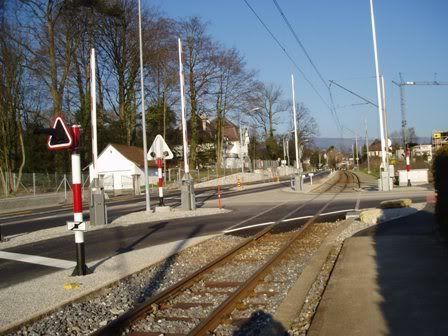
It seemed that as work progressed islands were being developed on the road to keep the traffic in disciplined lanes. Not just islands, but they are filled with earth and come Spring we will probably have small gardens being planted amidst the traffic. Some of the locals found it would be a good idea to perhaps build a small pond on the islands and plant a palm tree, but unfortunately this idea was rejected due to the cold icy Swiss Winters. Although the idea did arise about the building of an ice rink, but due to lack of space this was also turned down.

Having completed the road organisation, the Bipper Lisi problem was still there, but our brave Swiss road workers continued and a wonderful system of barriers was built to enable people to leave the village safely without having a confrontation with Bipper Lisi. I remember so well the first time I drove across the railway lines with my husband driving the car and our big red train came towards us shining in the morning sun. Unfortunately we found that we were sitting on the railway lines and if we didn't make a quick getaway we might be killed by our local train. We also hoped that the barrier didn't descend otherwise it might be that the boot of our car would be crushed by its weight. Luckily there was a gap in the traffic on the main road and it was foot down, give gas and go, go, go.

After this confrontation, I decided to stick to the old road and avoid anything to do with our new through road. It might be slower, but it was healthier. However, 2 weeks later there was an article in our local newspaper praising the modern system that had been built into our new road. It seems that when you drive out of the village there are sensors built into the road which detect when a car is on the railway lines and the train is coming. This ensures that the train makes a full breaking manoevre and the barrier stays open. There is no danger for the car and its passengers and there is no possibility of a fatal accident.

Bipper Lisi often makes breaking manoevres, it cannot be ignored in the village. Before the new system was built she often made an urgent stop - her whistle blew, her brakes screeched and it was quite a spectacle. Thinking things over I have decided to use the old road - it might be less exciting but somehow I feel safer.


Our New Island Scenery

Image


Image


Image


Image


Photobucket - Video and Image Hosting


Nera and her Haircut


Photobucket - Video and Image Hosting


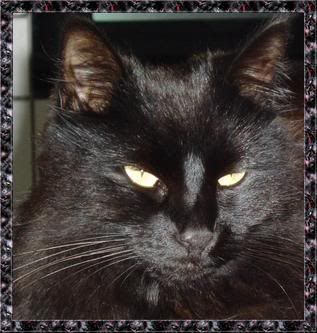
As you can see from my photo, I am a beatiful cat. I live my life in a small village in Switzerland and at the age of 12 weeks my sister and I moved in with a human couple. They are quite well organised and we cats have a satisfactory life in our dwelling place. Food is always there, as well as something to drink and we go out for country expeditions now and again - mice catching and bird watching.

Now and again small things tend to disturb my organised cat life. I have a beatiful long silky black fur which I keep in form by washing it quite often during the day. It does tend to get a bit tangled, especially in the Summer months (dried up snails, twigs and grass) which is annoying and my human takes me into his arms and strokes me which can be quite pleasant, but beware. He somes uses scissors and whilst I am trying to relax snips some tangled bits out of my fur. Actually I am quite pleased with this treatment as it makes things easier to groom afterwards, but as Chief cat in the house I cannot stoop to such a level and accept. I try to tell my human this treatment does not comply with my high position, but he just doesn't seem to understand and clamps my neck fur in his hand (making it impossible to move) and continues snipping. After the Summer season I noticed that my human just didn't bother any more - so I thought.

One morning I wanted to take a quick morning stroll after eating breakfast and noticed that the window was closed. After making noises (that is all these humans seem to understand when I want something) I was ingnored. Me - ignored - I sensed there was something up somewhere. My humans seemed to be a bit on the nervous side and suddenly I saw it. The square white metal fenced box with a handle. This is always a signal that a journey would be made to a place which smelt of other animals than cats, and where I had been already. It had unpleasant memories. I once felt bad and had to stay there a few days, away from my usual surroundings. Once I decided to eat 25 cm of string and I was taken there and had to stay at least 3 days.

This was the signal to disappear quickly. Unfortunately I was not quick enough and only got as far as the bathroom. I was suddenly in the bathroom alone with my human. He grabbed me (again by the neck) and carried me to the big white metal box. The lid was closed quickly by the other human and I was fenced in. Me, Nera the Chief of all the cats. I suddenly felt the box moving and I was sitting in a car travelling through the places where I usually went hunting. I did a few miaows but this had no effect on the human driving the car.

Eventually I arrived at the place that brought back so many bad memories. After a while I was moved into another room, someone stroked my chin (I hate having my chin stroked) and I then drifted away into cat nirvana. I had been there before - that was when afterwards I lost all interest in the tom cat next door - come to think of it all tom cats. Some time later I awoke next to another metal box with a cat in it - much different to me and I didn't recognise his smell. I still felt somewhere on another planet, but smelt and heard a voice I recognised. One of my humans.

Another car ride and I was back again where I belonged - in my territory. Still feeling drowsy and not so good I managed to somehow drag myself out of the cage. The rest of the day and night seemed to pass in a mist - nothing interested me, not even my sister Tabby or the stupid little Selkirk Rex cat that lives with us (he is such a baby).

The next day I felt like Nera again, although not quite. I decided to have a morning lick to see what I could find in my wonderful long silky fur. Everything was fine until I started on my body. Everything was so short. No tangles and no dried up snails or other strange objects. All was gone. How insulting - I had not only had a hair cut, but they put me to sleep before they cut my hair. All hopes were dashed of being leading lady in the next Garfield film and I am sure David Attenborough wouldn't even take me into consideration for a film on the Nature Channel. I was only fit for a Hair Restorer advertisement (before and not after). And to think we were worshipped as Gods in Egypt (must look into my ancestry one day).

To add an insult even photos were taken of how my fur was styled.

My Hair Cut

Don't tell my humans, but I do feel a lot better after the haircut. It doesn't itch so much any more and I can move much quicker.


Photobucket - Video and Image Hosting


Thursday, 2 August 2007

How to make your own Earthquake


Photobucket - Video and Image Hosting


For such a small country Switzerland achieves admirable results. We even manage to manufacture earthquakes. First of all you have to choose a town that lays in an area where earthquakes can occur. We chose Bâle, a town sharing its borders with France and Germany. In 1356 Basel was destroyed by an earthquake so this was a good choice.

The next step was to organise some deep-heat mining - since the beginning of December a hole had been bored in Bâle at a depth of approximately 5 Km and water was pumped into it to increase the porosity of the bedrock with the idea that the warmth from the ground rock could be used for heating purposes. The project did say that a small earthquake and vibrations would accompany the work and there could be a small risk. However the population were assured that everything was under control and everyone seemed to be happy (except for the people living in Bâle as it is not funny when your furniture shakes from time to time and various fragile objects fall out of their cases or crockery may fall to the floor).

A small problem did arise yesterday on Friday at 05.49 p.m., when an earthquake occured reaching 3.4 on the richter scale. The police in Bâle had quite a lot to do with people phoning and asking what was happening and if they have to be evacuated. As no actual damage occurred the police managed to reassure the inhabitants, although one policeman is quoted as saying "there were strong vibrations".

Although the Swiss can now do something that no-one really thought that such a small country could achieve, they have decided to stop the project for the time being. I am particularly happy about this as Basel lays only 40 Kilometers to the North of where I live.

28.11.2006 1st Aid Refresher Course


Photobucket - Video and Image Hosting


As one of the people responsible for 1st aid in the company where I work, I have to attend a course once a year to make sure I keep in training. Being also a member of the 1st aid organisation in our village, it is just a welcome alternative instead of spending a day at my desk at work. Today it was again time to have a practice and to refresh the CPR certificate.

Our trainer, Alex, came once again from far off Zürich to put us through our training programme. He works for an organisation specialised in training people for first aid assistance. We were a group of seven people. Three of us working in our business location and the others coming from our daughter companies situated in Emmental and near Basel. A mixed bunch, one gentleman ready for retirement, one man belonging to the fire fighters, a male and female working in the factory and 2 girls both working in the offices, and myself thinking about giving up such extra work as I only have another 4 years to go and could do with some first aid help myself now and again.

The main target was to renew the CPR (Cardio Pulmonale Reanimation) Certificate and to learn the workings of a defibrillator. I had already mentioned that I had no intention of renewing the CPR certificate as my health would not allow that any more. I was told that I should attend the course all the same, so there I was watching everyone else get blue lips from breathing into the nose of a plastic dummy and red hands from pressing on the thorax of the dummy. All movements (2x breathing and 30x pressing) were registered on a paper stripe to see if enough pressure and air was being applied. Nearly everyone had to do the test twice until the results were achieved. As our company has decided to buy 4 defibrillators, we had to learn how to apply these as well. Although my health didn't allow me to bring a dummy back to life, it did allow me to learn how to apply a defibrillator.

What is a defibrillator. If you have ever seen George Clooney in an American hospital film with 2 electric contacts in his hands waiting to be told - now!!! He then applies them to a totally unconscious near to death patient who then jumps in the air with 2,000 Volts being put into his lifeless body, and thus bringing the patient back to life. Our defi's (as we call them) were not exactly the George Clooney version, but they have the same effect. Whilst one of our brave helpers was breathing and pushing on the dummy we switched the defi on. It then started talking, telling us to put the contacts on the body in the right place (they were complete with a map of where to put them) and after a time the machine said stay away from the body (dummy) and press my red button. There was a loud noise which meant the dummy had been electrocuted bringing him back to life. If anyone happens to touch the body during the electric shock treatment, he will also be electrocuted, thus saving one person, but killing another. A defi is not to be underestimated. It was great fun and we all hoped that we would never have to use one of them. After everyone had passed the practical examination and all had blue lips and strained muscles, we had to carry on with the second part of the test.

We were given 15 questions (multiple choice) which we had to answer, allowing only 2 answers to be wrong. We all passed this test so the certification of the CPR test was achieved.

Our trainer still had 3 hours left so he had a few more interesting trials to carry through with us. He left the training room and taking 2 of us with him the remining few were told to wait in the room. After a short time one of the colleagues outside came in to say there had been an accident and help was needed. We all walked to the place of the accident to see what could be done. Our trainer was laying head on the bottom stair and feet on the top stair. He had fallen. Before any of us could start, our fireman decided to take charge of the situation. He decided the best thing to do was to remove the victim from the staire and to lay him flat on the floor. A five minute discussion then arose about the best way to do it. Luckily the victim was unconscious otherwise he may haved noticed that time was going. I did interrupt the conversation by saying in a loud clear voice that it was time for someone to go and alarm the rescue team on the emergency telephone no. Everyone thought that was actually a good idea. In the meanwhile the victim was transported by 4 people to a place where he could lay flat. As he was unconscious he was placed on his side in a correct position. I found that his head should be at a better angle in case he would choke if he happened to vomit. This was actually a good idea, only our trainer had already organised that blood would pour out of his mouth if this was done. It was quite colourful, but the effect it had on us all was helplessness. After a while the victim got up and told us all what we had done wrong. The next 10 minutes was spent in clearning the mess off the floor from the red coloured substance he had put in his mouth.

Next job - this time our trainer disappeared outside with two helpers. We were then called to come and see what has happened - someone was choking. We had put our coats on and went into the cold. One of our members was sitting on a bench choking quite convincingly and pointing to her bag. At first we though a piece of food and lodged in her windpipe, but soon noticed that she neither had asthma, a heart complaint, nor an allergy. We eventually realised that we should search her bag for a medicine that would help. Unfortunately the "victim" suddenly became unconscious as we didn't really know what we were looking for and so we didn't find it. We then had a helpful hint from our trainer who said look at the side of the bag. We then found something looking like a large marker, which on further examination, we found to be an injection instrument containing adrenalin. This is to be used when someone is allergic to a sting from an insect. One of our members "injected" the medicine and the victim was again saved. We felt quite proud of our efforts although our trainer found instead of searching through the bag it would have been more sensible to empty the bag. It would attract less attention if we had been in a public place and would not have been under suspicion of assault and stealing. We had learnt what not to do and are all sure that the next time it will be better.

The finale was a picture show of various injuries caused by burns and cuts where we were told that we didn't have to look as some of the pictures were not exactly asthetic.

After our refresher course we were all hoping that we have no serious accidents where we work and that we will never have to apply a defibrillator. Tired but happy we all returned to our homes glad that this was over for a year.

Wednesday, 1 August 2007

My Dad


Photobucket - Video and Image Hosting


My dad was born in September 1915 a year after the first world war broke out. His parents were Henry Alfred, born 1875 in South Hackney, London, England and Emily Agnes born 1877 at Sissinghurst Castle in East Sussex, England. His eldest sister Emily, was then 13 years old and another sister, Hetty Isobel, was 11 years old. Then there was a gap until my dad’s brother came Henry Jason who was 2 years older than my dad. One sister, Grace Charlotte born 1902 had died at the age of 2. They were all living in Stratford, East London in Bridge Road when my dad was born.

Image

Grandmother Emily Agnes grew up in the country where her large family (11 brothers) were all involved in farm work, mainly as farm labourers. She herself worked in the dairy at the Sissinghurst castle farm. Grandfather Henry Alfred had grown up in one of the poorer parts of London, but had always had work and was lucky to be employed by Lloyd’s Insurance company in the business area of London as a night watchman. This ensured a steady income, although the family all had to work for their living, except for my grandmother who had to look after the household and the children. I often had the feeling that my grandmother may have had a social shock coming to the rough Cockney East End of London to bring up her growing family after living in the quiet countryside of East Sussex. She was a small neat woman and her fine English pastries country-style still remain in my memories today. My grandfather was quite tall, a working man and as such seemed to have spent his free time pursuing the working man’s hobbies of the time. He like to have a drink in the local pub (sometimes more than one as my father mentioned to me) and loved dogs especially the dogs called greyhounds to be found at the racing tracks where he often had a small bet. But now back to the beginning.

My father was born one year after the outbreak of world war 2 and it was not long after his birth that grandfather Henry Alfred had to join the British Army to fight for victory in the trenches. As far as I know he was sent to France and we have some photos of him in his uniform. He was enlisted in the medical corps. Not that he had a particular gift for medicine, but he was 40 years old at the time and his duty mainly consisted of collecting the fallen soldiers on the front and bringing them back for burial.

My father's first memory, so he told me, was when he was 3 years old. He was at home with his mother and there was a knock on the street door. His mother opened the door and there was a very tall man standing there dressed in army uniform. This man was welcomed into the house by my grandmother. My father asked his mother "Who's that man, mum" and got the answer "It's your father". So my dad met his father at the age of 3.

Although my father had a safe and secure life as a boy tragedy came to the family through an accident involving his older sister Emily. Towards the end of the first world war sister Emily was 15 years old and was working as an auxilliary for the post helping to sort and carry the post out. She was working at one of the main London sorting offices in Fenchurch Street when it was hit by one of the last bombs of the war. The bomb destroyed part of the building and my Aunt Emmy was hit by pieces of rubble flying around after the attack. She was taken to hospital but her right leg could not be saved and had to be amputated. Perhaps today with our modern medicine this could have been avoided, my father often told me this. I knew my Aunt Emmy very well and looking back I never had the feeling that she was handicapped by only having one leg, but the shock the family must have had at the time cannot be imagined.


Image


My father grew up in Stratford and the day came when he started going to school. His brother, Henry Jason, was the best pupil in the school and won a scholarship to entitle him to go to the high school. Although the scholarship was won, unforunately there was no financial support. My father's family did not possess the means to allow this scholarship. A uniform would have to be bought, school books and the material as well - in those days there were no funds available for such an education for the son of a working class family. My father was also a very good scholar and would also have been available for a better schooling chance, but the income of the family was no better and the two boys remained at their school until they were released for work at the age of 14.

Image

Both my father and his brother were very keen on football and they were both members of the school football team. I was given an exercise book by my father with compositions that he had written for the school. Here is one of them:

Written 9th April, 1924

"How I spent good Friday

On the morning of Good Friday I began the day by getting in the hot Cross buns for our breakfast. All the morning I played a game of cricket with my brother and six other boys. When it was two o'clock my brother and I went to the West Ham football ground, seeing a good game between West Ham and Burnley resulting in a win for the Hammers.

West Ham started off, as if to be sure of a ten-none victory. A great combination between Earl and Ruffell enbled the last mentioned player to find the net with a great left drive. Immediately after the centre the Hammers gave Burnley a real lesson in football. they passed the ball accurately from man to man, but a mistake on Watson's part, enbabled the right back of Burnley to clear with a fierce drive. It was then Burnley's turn to attack, and Hufton was kept busy for ten minutes. Before half-time Watson and Ruffell put on two further goals.

In the next half both goalies were kept busy, Hufton especially. Yews continually beat both backs only to find no-one in the centre. Play was very even and more than three times did Beel the centre forward of Burnley, cut through the backs to be foiled by Hufton. Two minutes from the end Gibbins scored through a neat pass by Ruffell. That brought the score to four for West Ham. Soon after, the whistle went for full time.

We went from Upton Park to the Princess Alice, then a short walk from there brought us to the Hats Fair. Both of us enjoyed ourselves immensely on the coconut shies, darts, ringboards and all the other things. At half past nine we went home claiming between us two boxes of chocolates, three coco-nuts and a packet of cigarettes."

As young man my father often visited the Theatre Royal, Stratford. His parents both enjoyed a visit to this theatre and he was often taken along with his brother and sister. He particulary remembers seeing played on the stage Sweeney Todd, the Demon Barber of Fleet Street and often told me the story when I was younger. He also saw Bela Lugosi on the stage as Dracula in London and was impressed by the way he was shown to fly. This must have been in the 30's. My father was a big fan of the jazz of the day and remembers seeing Fats Waller on the stage in London at the London Palladium at his famous London concert about 1938. He still speaks today of how great Fats Waller was and I have also become a fan over the years and possess a few records.

After leaving school my father's first job was where my grandfather was working. Lloyd's Insurance Company in the City of London. His brother was already working there as a maintenance man and my father started as a messenger boy. His job was bringing letters etc. to other companies or on errands for his own company. Although this was a "good" job for someone starting on his way through life, it didn't appeal to my father and after 2 years he left. He found employment in a Hatters called Thomas Townsend situated also in the City of London in Leadenhall Market near to Fenchurch Street. In this shop hats were sold to the city businessmen - bowler hats and top hats mainly.

From hats my father went to a shop in Stratford, East London where he learnt the ins and outs of the tailoring business. He was a salesman for the "50 bob tailor" which was a chain shop belonging to the businessman Henry Price. Henry Price decided to bring suits to the people for the price of 50 shillings. He had a lot of success with this idea and my father learnt a lot about the clothing trade whilst working in this store.

It was at this time that tragedy struck the family once again. His sister Hetty had already passed away when my father was at school having tuberculosis which was unfortunately a common complaint at that time. Father's brother Henry was still working as a repair man for Lloyds Insurance when there was an accident in connection with Lift repairs. He fell and died within a week of his injuries. Perhaps today something could have been done, but in the 20's medicine hadn't made such progress as today.

Clouds of war then began collecting on the horizon and my father realised that his country would need him in case of war. He realised that his future as a salesman in a clothes shop would soon come to an end and started to work as a window cleaner to bridge over the time until he was called up into the British Army.


Photobucket - Video and Image Hosting


As the war was coming closer my father gave up his regular job as he knew there would be no great future for it. He spent the time cleaning windows and other odd jobs until the letter came telling him it was time to go to war in the following words:

"Dear Sir

In accordance with the National service (Armed Forces) Act, 1939 you are called upon for service in the Territorial army and are required to present yourself on Thursday 16th May 1940 at 10 a.m. or as early as possible thereafter on that day to:

304th Infantry training Centre
Plumer Barracks, Crownhill, Plymouth.

Plymouth (nearest railway station)

A travelling warrant for your journey is enclosed. before starting your journey you must exchange the warrant for a ticket at the booking office named on the warrant. If possible, this should be done a day or two before you are due to travel.

A postal order for 4s in respect of advance of service pay, is also enclosedl. Uniform and personal kit will be issued to you after joining H.M. forces. any kit that you take with you should not exceed an overcoat, change of clothes, stout pair of boots, and personal kit such as razor, hair brush, tooth brush, soap and towel.

Immediately on receipt of this notice you should inform your employer of the date upon which you are required to report for service."


The actual regiments where my father served have got a bit lost of the years but as far as he can remember he started in the Sherwood Forresters. This regiment was changed to home defence and he was sent to another. The home training mainly took place in the Scottish Highlands. My dad felt a bit already abroad as he told me that he didn't really understand very much of the language the inhabitants of the local farms and houses were speaking.

During his first days in the army he met up with two men. They got on very well together and their friendship lasted throughout the war. At one point there was a re-organisation and 3 men from my father's group were needed to join a Welsh regiment. As the three friends realised this would be the chance to stay together, they volunteered and all 3 become members of the 69th Medium Regiment of the Royal Artillary.

It didn't take long and his first meeting with the front was the landings at Salerno in Italian (under fire from small boats). He spent most of the war in Italy, mainly around the Bay of Naples - Sorrento, Ravello, Amalfi - towns which I later visited on holiday, not without thinking of my father's war experiences. He often told me stories of the narrow mountain road up to Ravello with donkeys whilst under fire from the other side. He had a pamphlet showing the church in Amalfi, how proud I was to be able to visit the church one day myself as a teenager. It looked exactly the same as on the leaflet he had. Another experience he had was to see Beniamino Gigli and his daughter perform for the troops in a NAAFI in Italy. He told me that during the concert the military police had locked all the doors and before the men left all their papers were examined. They found about 30 deserters that evening.

As he was with the Royal Artillary he was on the large canons that were used. His war injuries consisted of dropping a shell on his foot whilst loading. Luckily it had been raining and the ground was soft and muddy, otherwise he might have lost his foot (according to my dad's report), He also got malaria whilst in Italy and had it again once or twice after returning home after the war.


At some time he was sent to Africa - Egypt and afterwards to Palestine (Israel didn't exist then). Needless to say the sights he saw in these countries impressed him immensely after growing up in the East End of London. The war came to an end when he was on a ship just off the French coast. The regiment then all went to Paris - which he quite enjoyed. For the last few months he was in Germany in the area around Wuppertal, where he was in charge of a section of a Prisoner of war camp. He managed to go and see a football match in Germany between two English teams that had played for the benefit of the troops.

My father had always had a very good singing voice and so did his 2 colleagues. They formed a singing group together and often entertained the troops on various occasions, winning a few prizes for their efforts. Here is a photo of the 3 of them, but taken after the war.


Photobucket - Video and Image Hosting

He was once on leave when his family's house got hit at the beginning of the war. He was sent home to help the family and they were given another house on the outskirts of London. On this leave he spent some time with friends and often went out in the evening for a drink. It was on one of these evenings that he met his future wife, my mum. In the house my mum lived in there was a family living on the top floor and it was their son that was a friend of my father's. He knew my mum and introduced them to each other. Afterwards my dad went back to the army and during the 4 years he was in the army he and my mother wrote to each other. He came home from the army on Friday (so the story goes) and on Sunday they were married.


Photobucket - Video and Image Hosting


After the war and getting married my mum and dad moved into my grandparents house in Bethnal Green, East London, in the upstairs rooms as the family living there had moved out. They had three rooms - a kitchen, bedroom and living room. The next step was to find a job. In after war Europe you couldn't choose, and my dad had to start from the beginning again. He took a job at the railway as a normal worker, but only stayed until he found something better.

My father's parents (my grandparents) and my aunt were living in Essex in Chadwell Heath and we visited them every second Sunday. I remember having lunch at home and afterwards taking the Central Line train and a bus to their house. They were still living in the house they had moved to during the war when their house in Stratford had been bombed. The following photo was taken on one of these visits.

Photobucket - Video and Image Hosting
My Aunt, my grandmother, my dad and my grandfather

His next job was working for Kensitas, a cigarette company with their factory in Old Street, North East London. It was not far from where he was living. Eventually after a year and half of marriage I arrived in a cold and snowy December, so the family was complete. My dad worked for 3 years in the cigarette factory and through a colleague took a job working for Ford Car Company in Dagenham . He was working at a subsidiary called Kelsey Hayes which was in Dagenham and where the wheels were made. He worked on a factory line responsible for the manufacture of the hubs. I remember that he had to work on shifts, this meant two weeks day shift and two weeks night shift.

The night shift was particularly hard. We lived in Bethnal Green and my dad had to go to work by underground train to Barking, where he changed trains to get to Dagenham Dock. This was a one hour train journey each way. I remember I was at school. During the day he slept in my bedroom as this room was "out the back" and much quieter than his own room during the day where you could hear passing traffic and the children playing out in the street. Although I was at school during the day, my mum told me that I had to be quiet when I came home as my dad was sleeping. He usually got up at 5.00 in the evening and my mum cooked dinner for him. He then left for work around 7.00 p.m. and came back home about 8 o'clock in the morning when I was getting up for school. I think we was all relived when he was on the 2 week day shift.

As I mentioned earlier my dad was always a good singer. Every christmas we had our family Christmas party and he often sung a few from the old days - mainly songs from Bing Crosby or Al Jolson. It was also from my father that I learnt about the music of Fats Waller, Cab Calloway and other Jazz music of the 40's. He was also a Glen Miller fan.

I remember as a kid going out with my dad. Easter Good Friday was a holiday and everything was closed. For some unknown reason my mum always decided to make that her cleaning day so dad would take me for a walk through the city of London. It was very interesting walk as he took me to the small alleys and backstreets of the City of London which he knew so well from his days as a messenger boy at Lloyds Insurance. He would often go on a days excusion with me visiting the museums in South Kensington. The Natural History museum and the Science Museum as well as the Victoria and Albert. I think he was just as interested and impressed as I was with the outings we did.

My dad also loved horses. Not for their fine looks but more for their capability to run in races. I think as a child if we went on holiday there was always a race meeting taking place nearby. We often went to Great Yarmouth in summer and it always coicided with the race meetings. I probably knew how to work out a bet before I started algebra in the school. The funny thing was my dad really had a feeling for the horses and knew exactly a good or bad bet. We never became millionaires, but my dad never really lost. Sometimes a small win, or he broke even. My dad also liked to do the football pools every week. No big win, but now and again something small.

As we only had our first television when I was about 10 years old, cinema visits were often on the plan. My dad loved a good cowboy film, but above all a gangster film. Even when we had the tv he would take me to the pictures to see the latest Al Capone film - The Valentine Day Murders - or The Valaci Papers. The Untouchables was also a favourite tv series he liked watching. His music taste was and still is the old jazz of the 30-40's - not too modern and big band music.

I eventually left England and my dad was alone with my mum. At last our old house in Bethnal Green was ready for demolition and a move was made to a council house in Dagenham which was much nearer to where my dad was working. The last few years of my dad's working life were a bit easier to cope with without the long journey to work and back. He was eventually retired and his working life was finished. He was always very helpful at home and was always ready to help with the washing up and cleaning. Only ironing wasn't his favourite, but my mum did that.

As life went on my mother died at the age of 72 and my dad was left alone. At first it wasn't easy coming to grips with a daily life, but my dad was always an optimist and very logical. After some time he met a very nice ladyfriend with whom he could go out with and meet people. He soon joined the local senior citizens clubs and became very popular in one of the clubs as the caller for the weekly lotto game due to his clear voice. Most week-ends there was always something to do. A local dance at the club or just meeting with other friends and neighbours. There was an outing or holiday organised by the clubs which he also joined.

He still lives in his house on his own, but has many friends in the area where he lives and still has his ladyfriend. They help each other to overcome the difficulties of old age. She had an accident some time ago and broke her hip but my dad is always there if she needs anything. My dad's health is still quite good for his age. He is now 91 and still manages his own daily routine. Obviously there are a few health problems, but he is still active and makes sure he goes out at least once a day, even if it is only to fetch the local newspaper or his weekly visit to the local Betting Shop.

Grögu (Swiss Name) or Fluffy (English Name) - our blind cat

Grögu (my Swiss name) also known as Fluffy

Grögu is our baby. He is now just over 3 years old and is a pure Selkirk Rex. He was born on a farm where the farmer's wife breeds cats. Although a typical Selkirk Rex with his fluffy curly fur, he has extremely long legs and a long body. Grögu is Swiss German for "funny little thing" and that was how he got his name.
Grögu had an accident in January 2006 and lost his sight. Since then a lot has happened and both Grögu and his two legged owners had to learn a lot.

At first Grögu was a very careful cat. Spent a lot of time just sitting in the home before he made a movement. I think the first journeys he made independently were to his toilet, which he seemed to find first of all. He also lost all the fur on his tummy and inside his back legs after the accident, but the vet gave him some male hormones and within a month or so he look again like our Grögu.

Within a few weeks he was quite aquainted with our home and found his way around very well. He was not very well accepted by the other two cats. Animals can be very brutal when they notice that another animal is handicapped, but we just had to learn to accept it and the other two cats also had to learn to accept Grögu. It's not 100% acceptance now, but I don't think that exists amongst cats. Even my other 2 cats, litter sisters, sometimes have a disagreement about who gets the cat nip first.

I remember the first time Grögu climbed the cat tree. The height is about halfway to the ceiling so it's not so high and there are 2 steps to get there. He found his way up very slowly and carefully, hanging onto each level with his front paws until he pulled himself up completely. The first time he jumped down from the top to the floor, but only once. Since then he always goes from one step to another.

When the months got towards Spring he wanted to go out as he was an outdoor cat like our other 2. We live fairly rural so they all liked to go mousing and other catty hobbies. Grögu was the best mouser of all and had the record (not really to be proud of as a human, but cats have a different system). We fitted a strong wooden pole up in the garden and put a harness on Grögu. We had an expandable dog lead from his harness to the pole, so he could walk around in the garden. We also had another fixture on the wall for his walk, so he had a bit of a change now and again. Of course, he couldn't go mouse hunting any more, but the other cats sometimes brought them home and deposited them in the garden and Grögu made sure that they didn't stay long. Grögu is just one of those cats that find mice a sort of 5 star delicacy.

As my husband, is retired he had a bit more time than me for the cats and he started going for walks with Grögu at least once a day on the lead. Grögu enjoys that a lot and gets excited just like a dog when he goes out with his lead. He finds his way so well, as he knows the route. If we go a bit off the beaten path, he just walks with his nose close to the ground sniffing his way. He always does his business somewhere on the route, probably to mark his territory.

We are quite well known amongst the neighbours with our blind cat and they always have a few words with us if they meet us on one of the walks and also ask how Grögu is keeping. Usually when the other two cats notice that Grögu is going for a walk, they come too, walking along with my husband. I think I will have to film them one day.

Although we were devistated when Grögu had his accident, we have learnt a lot since, and wouldn't want to be without him. As my husband once said, he just belongs to us.